19 October 2026 Giuditta Armiraglio
Journal of Experiences
The value of a brand also depends on how people experience it: understanding their needs is the first step toward designing better experiences
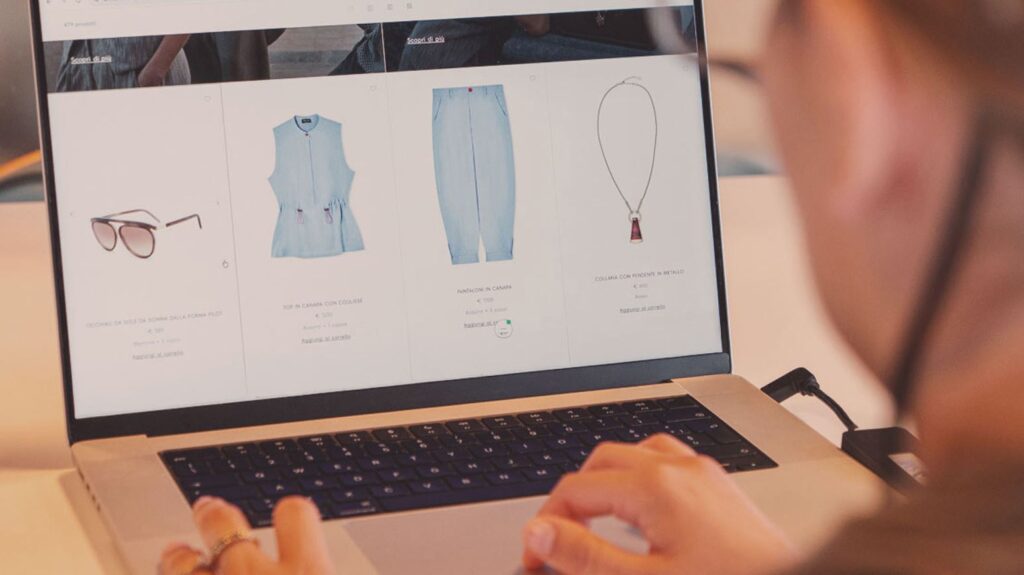
In the fashion and luxury world, experience is a key component of the value people assign to a brand. Every interaction—from browsing an e-commerce site to visiting a boutique—contributes to shaping its identity and how it is perceived.
For this reason, offering quality products or having a recognizable identity is not enough; every touchpoint must address people’s needs, guiding them through a journey that is simple, consistent, and enjoyable.
This is where we at TSW begin: we listen to personal experiences, observe behaviors, and translate our research findings into concrete decisions—designing experiences that both elevate the brand and meet the needs of the people who engage with it.
The specificities of customer experience in the fashion and luxury sectors
In fashion and luxury, purchasing choices don’t just depend on the price or features of a product. Desire, trust, inspiration and perceived quality come into play.
People explore collections, compare alternatives, search for information, and imagine the product in their lives. The digital experience must accompany them on this journey, making navigation easy without sacrificing brand identity.
Added to this is the international dimension: digital habits, cultural references, and expectations change from one market to another. For this reason, it is important to validate content and purchasing paths with real people, without assuming that the same solutions work everywhere.
From listening to experience design: the TSW method
Each project starts with a question: what do people really experience when they connect with a brand?
To address this, we integrate qualitative and quantitative research, data analysis, SEO, design, and experimentation, following a path from understanding needs to design and continuous improvement.
1 – Understanding needs and behaviors
Before redesigning an e-commerce or retail experience, let’s understand what facilitates people’s journey and where, instead, difficulties arise.
We do this through various research and analysis activities:
- qualitative interviews and experience tests;
- usability testing on sites, apps, checkouts and restricted areas;
- expert analysis of UX and information architecture;
- card sorting and tree testing;
- analysis of navigation data, heatmaps and session recordings;
- survey and analysis of brand perception;
- SEO analysis of searches, to understand what people are looking for and what words they use.
These activities help us identify obstacles that aggregate data alone cannot always explain: an unclear category, a difficult-to-find product, insufficient information, or an overly complex checkout.
2 – Designing experiences that are consistent with the brand
In luxury, designing a good experience does not mean applying standard solutions, but finding the best way to respond to people’s needs while respecting brand identity.
For this reason we support brands in designing:
- information architectures and product categories;
- UX/UI interfaces for fashion and luxury e-commerce;
- design system and interaction libraries;
- customer journey and digital touchpoints;
- editorial pages and content dedicated to the collections;
- routes for purchasing, setting up, registering and booking appointments;
- digital tools for boutique staff.
The goal is to build coherent and recognizable experiences, capable of enhancing the brand and supporting people in their various interactions.
3 – Measure, validate, improve
Our work does not end with the publication of a new site or interface. It’s important to continue to look at how people use what we’ve designed, to understand what works and what can be improved.
For this, we integrate testing and validation activities with measurement tools such as dashboards, analytics, SEO monitoring, route analysis, and A/B testing on content and layout.
In this way we help brands evaluate the effectiveness of design choices and improve the experience over time, starting from people’s real behaviors.
TSW’s experience with brands in the industry
Over the years, we have partnered various fashion and luxury brands with research, design, and experience optimization projects, spanning e-commerce, customer journeys, retail, and digital visibility.
Armani: an integrated path toward digital evolution
With Armani, we worked on various aspects of the digital experience, integrating UX, SEO, research, and performance analysis.
From revising information architecture to SEO optimization, from international site migrations and testing across desktop and mobile devices to the creation of integrated dashboards—this journey encompassed multiple markets and areas of expertise.
This work demonstrates how UX and SEO can combine to enhance the digital experience, making collections easier to discover, content more accessible, and navigation more intuitive.
Prada, Bulgari, and Bottega Veneta: listening to people to improve the e-commerce experience
With Prada and Bulgari, we focused on the e-commerce experience by involving users across various markets. For Prada, we analyzed the purchasing journey—specifically the checkout process—while for Bulgari, we supported their website redesign through expert analysis, UX/UI design, and usability testing.
For Bottega Veneta, we conducted UX research on their e-commerce platforms in Italy, the United States, Japan, and Korea. By observing how people navigate and interact with the site in these different markets, we were able to understand their needs and behaviors, which in turn guided our design decisions.
These three projects share a common approach: using the human experience as a starting point to inform design choices, all while remaining faithful to each brand’s unique identity.
Fendi: ensuring consistency across digital and retail touchpoints
With Fendi, we worked on evaluating and redesigning various digital touchpoints—from their website to their app—establishing a visual and interaction system that is both consistent and adaptable to different contexts. The project included analysis, the definition of design patterns, and testing with sales advisors at the Fendi flagship store in Rome.
This work allowed us to consider the brand experience as a continuous journey across both physical and digital touchpoints, while also involving the people who guide customers in their interaction with the products every single day.
Designing experiences that bring value to the brand
In fashion and luxury, designing the customer experience means finding a balance between brand identity, people’s needs, and the specificities of different markets.
For us at TSW, the starting point is always the same: listening to people, caring for them, and respecting their time.
Understanding their behaviors, desires, and challenges allows us to design e-commerce, services, and retail experiences that are simpler and more enjoyable to live. Experiences capable of building stronger and more lasting relationships, capable of bringing value to the brand in the long term.