26 June 2026 Giuditta Armiraglio
Journal of Experiences
In physical retail, the brand experience takes shape, becomes people’s real experience and provides insights that would often remain invisible
Every brand builds a promise. It defines it in its products, its communication, and its strategy. But it is in the real world that this promise is verified.
The point of sale is one of the places where it is most clearly seen whether the brand’s intent is perceived as credible, coherent, and relevant.
In physical retail, the brand is not just narrated: it is traversed, interpreted, and tested. For this reason, the point of sale should not be seen simply as a sales channel or image platform, but also as a space for listening.
To evaluate the in-store experience, many companies rely on tools such as surveys, satisfaction questionnaires, and feedback requests. These are useful, but they primarily reflect what people remember or choose to state in hindsight; they are less likely to capture what remains implicit, nuanced, and unspoken in the experience.
At the point of sale, signals emerge that risk remaining invisible elsewhere: hesitations, waits, unasked questions, spontaneous reactions, lateral needs, moments of trust or friction. These are small steps, but often decisive. They don’t always fit into a questionnaire, and they rarely end up on a dashboard. Yet they contribute to defining the quality of lived experience.
Observe and listen, not just measure satisfaction
Observing, from a research perspective, means focusing on the context in which the experience takes shape: where hesitations arise, what dynamics foster trust, how people navigate the space, what elements confirm or contradict the brand’s identity.
Therefore, it’s not just about “measuring satisfaction”, but about understanding the quality of the experience as it happens.
Quantitative data effectively captures conversions, average times, frequencies, and recurring patterns. Other aspects of the experience, however, require presence, observation, and deep listening. They need to be interpreted in context and connected to what people do, search for, avoid, and perceive.
This is where in-store research takes on strategic value: it helps brands make more informed decisions about service design, team training, touchpoint organization, and continuity between physical and digital.
The customer experience: from brand storytelling to customer experiences
When a person enters a physical space, they bring with them expectations, desires, doubts, time, energy, and moods. One part is conscious and declarable. Another, often decisive, manifests itself in behavior: in minimal signals that reveal how that person feels about the experience.
This is where the brand promise stops being a story and becomes an experience.
This is particularly evident in highly relational retail contexts, such as luxury, where every detail contributes to building meaning. Perceived value does not arise from a single element, but from the precision with which the brand regulates distance, attention, pace, and presence.
What matters is the degree of welcome, the balance between presence and discretion, the ability to seize the right moment to intervene or leave space. It’s not just about service, but the quality of interpretation.
However, it would be reductive to think that this complexity concerns only premium brands. Every retail experience brings into play dynamics of orientation, expectation, exposure, choice, and trust. The language, the context, and the level of service change. What remains unchanged is that, at the point of sale, the relationship between person and brand becomes observable in a way that is difficult to replace.
The TSW approach to in-store research: projects for Mondadori and Woolrich
Some research projects conducted by TSW in retail contexts clearly demonstrate how the store can become a space for listening to experiences.
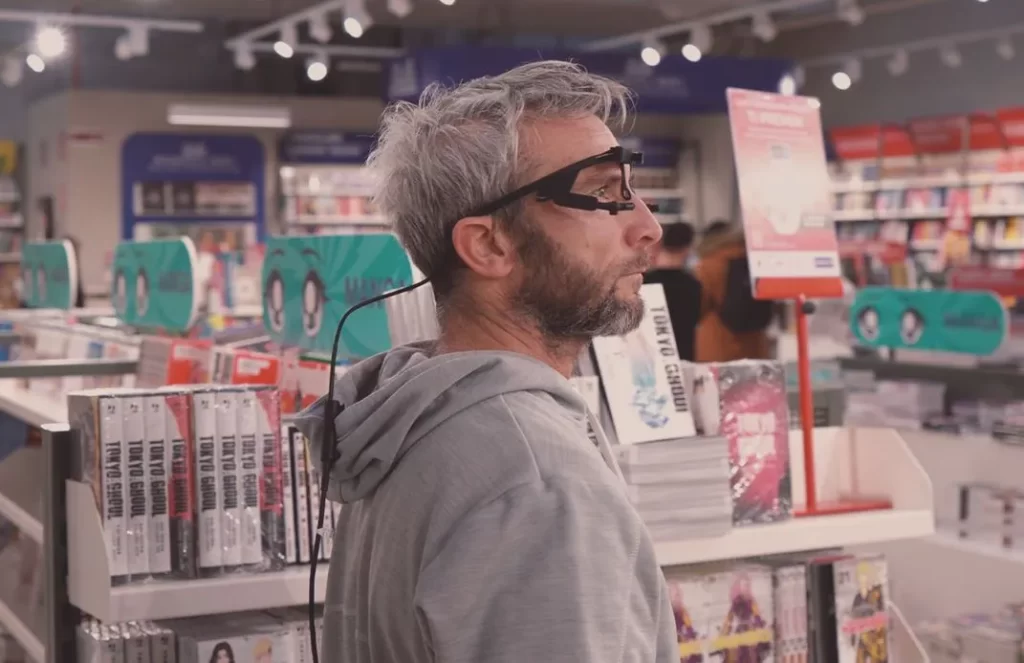
Not only through interviews and field observation, but also thanks to psychophysiological survey tools that help us understand the experience beyond what is stated: where the gaze rests, which elements attract attention, which areas trigger an emotional response, which messages remain in the background.
In the project developed for Mondadori, the in-store experience was analyzed by combining observation, interviews, eye tracking, EEG, and microsweating measurements. This allowed us to highlight a clear gap between what was present in the space and what was actually perceived: pleasant but unmemorable storefronts, strategic areas passed through without being understood, editorial messages viewed but rarely remembered.
The interesting finding, even in these cases, is not just about what people say. It’s about what the experience reveals as it happens.
Even in the research conducted for Woolrich, the integration of implicit tests, eye tracking, and skin conductance revealed which areas of the flagship store were truly capable of triggering attention and emotion. Some areas contributed significantly to brand perception, while other elements designed to communicate specific aspects of the brand were less effective than expected. Not because they were absent, but because they were not sufficiently legible in the actual flow of the visit.
These investigations show that physical retail is a context in which the brand can be observed in its concrete effectiveness: it is the place where what has been designed meets people’s behaviors, expectations, and interpretations.
From here, something more profound can arise: not just a better understanding of the experience, but a reconnection between the brand and people. This is TSW’s mission.