8 September 2026 Elena Toniolo
Journal of Experiences
An international research project to observe how people experience the brand’s website in Italy, the United States, Japan and Korea and transform what emerges into concrete design recommendations
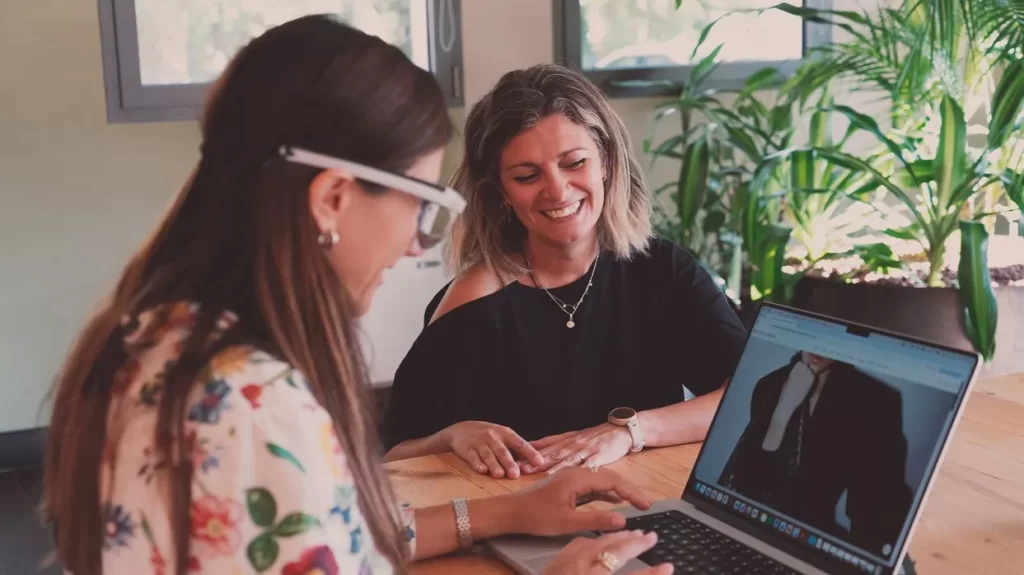
In the luxury world, an e-commerce experience must not only work: it must guide people in discovering products, help them navigate their journey, and, at the same time, convey the brand’s value and identity.
When the same site caters to different markets, the challenge becomes even more complex: different habits, expectations, and cultural references also come into play, which can influence the way people navigate, interpret information, and build trust.
This is the starting point for the project developed with Bottega Veneta: observing real people as they use the brand’s site to understand not only where they encounter difficulties, but more importantly, why.
The research involved people in Italy, the United States, Japan, and Korea, allowing us to compare behaviors, expectations, and perceptions across different markets and build an evidence base useful for guiding the evolution of the digital experience.
Observing the experience, not just the interface
A website can express a brand’s identity well, but it doesn’t always guide people with the same effectiveness throughout the entire journey.
To understand where and why this happens, it’s necessary to observe how people experience navigation: what they notice, where they look for information, what they expect, and what helps them continue.
In the project with Bottega Veneta, we therefore analyzed the experience along the key moments of the purchasing journey: from the homepage to category exploration, from product evaluation to the shopping bag and the steps closest to the purchase.
The goal was to construct a comprehensive reading of the experience, capable of highlighting:
- the points that can slow down or interrupt navigation
- the information and elements that help people orient themselves
- the expectations that accompany product discovery and evaluation
- the differences between markets and devices
- the most relevant opportunities for improvement for the experience
Not a simple list of problems, but an understanding of the reasons behind the observed behaviors.
A research project in four markets
The project with Bottega Veneta is part of a process that has already led us to observe people’s digital experiences in different international contexts, such as the research project developed with Armani.
Again, we developed the research process together with the brand’s stakeholders, defining objectives, areas of the site to observe, activities to propose to people, and criteria for interpreting the findings.
The research was conducted in Italy, the United States, Japan, and Korea, involving people selected through a screening process consistent with the target audience defined with the brand.
The sessions were conducted on both mobile and desktop, to observe how the experience changes depending on the device and context of use.
In Italy, we welcomed people into our laboratories, while in the international markets, the sessions were conducted remotely with a common research structure in the four countries to be able to compare the findings, without losing sight of the specificities of the different contexts.
And it is precisely this comparison that represents one of the most important aspects of the project: distinguishing what concerns the experience as a whole from what takes on a different meaning in relation to the habits and expectations of people in individual markets.
Listening to what people do and think
During the sessions, we asked people to perform realistic tasks on the site and to say aloud what they were thinking.
This allowed us to connect behavior and perception: observing what they do and, at the same time, understanding the expectations, doubts, and criteria that guide their choices.
We thus studied in depth their reading of the homepage, their orientation between categories and products, their understanding of the information on product pages, the readability of variants and availability, and the fluidity of the purchase process.
Where required by the research design, we also integrated eye-tracking to observe visual attention patterns and compare what people say with what they actually see.
Taken together, this evidence allowed us to gain a deeper understanding of what happens during navigation and which elements facilitate or complicate the experience.
From evidence to opportunities for improvement
After the sessions, we analyzed what we observed and heard in the four markets, correlating the different behaviors and identifying the most relevant patterns.
The final report provides Bottega Veneta with an interpretation of the experience from the perspective of the people: what works, where challenges arise, and what expectations come into play at different stages of the journey.
The evidence gathered thus becomes concrete guidance for understanding where and how to improve the experience, prioritizing the most relevant aspects emerging from the research.
Designing from real experience
In this project with Bottega Veneta, we also started by listening to and observing people to understand their experiences through their perspective.
At TSW, this is how we choose to work: bringing those who design products and services closer to those who experience them, bringing real experiences, needs, and expectations into the project.
Because it is from this encounter that experiences that are more relevant for people and more meaningful for brands can emerge.